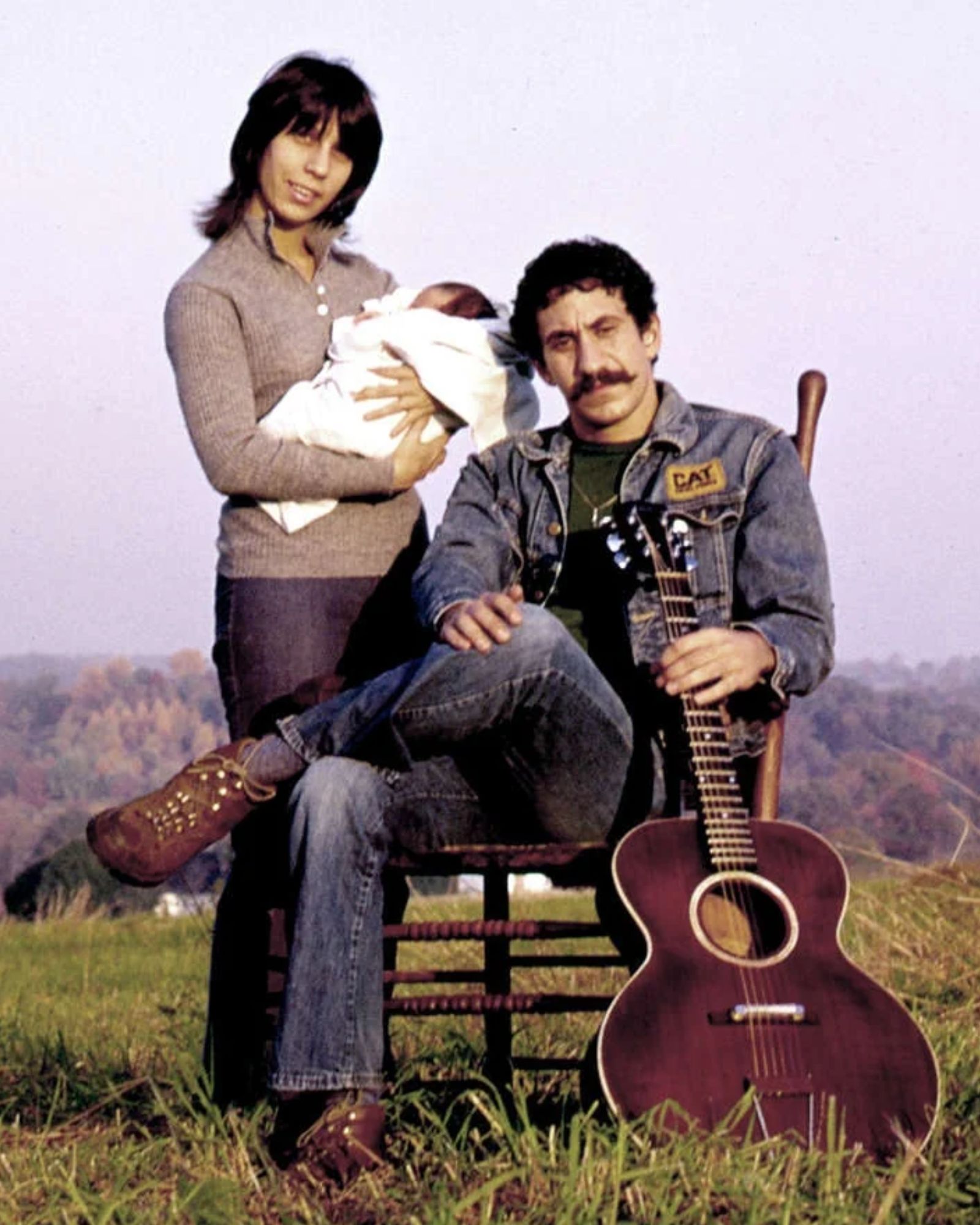
Near the end of a long tour in September 1973, Jim Croce wrote to his wife, Ingrid. He closed with a line that sounded like a man who had finally figured out what mattered: “Remember, it’s the first sixty years that count and I’ve got 30 to go.” About a week after Jim Croce died in a plane crash in Natchitoches, Louisiana, that letter arrived at the family’s home in San Diego. He was 30 years old.
The Last Phone Call
On September 20, 1973, Jim Croce was booked for a concert at Northwestern State University in Natchitoches. Before the show, he called Ingrid. In her 2012 book I Got a Name: The Jim Croce Story, she remembered that he teased the local version of an Italian sandwich, which a Philadelphia boy could not take seriously. He told her he loved her and A.J., whose second birthday was coming the following week.
He also sounded worn down. Ingrid wrote that he was frustrated with life on the road and unhappy that his tour had been stretched out by another month. He was ready to slow down.
Years later, Ingrid told the St. Petersburg Times that his “I love you” was the last thing she heard from him. She said it was the best goodbye anyone could hope for, and still not nearly enough. As she put it:
At least I had those words to keep in my mind.
What Jim Croce Wrote
The letter Ingrid later shared in her memoir reads like a plan for a second life. Jim Croce promised that when he got home, everything would change. “We’re gonna have a life together, Ing, I promise,” he wrote.
He listed what that life would look like. He would look after his health. He would pull back from public life, calling himself a future hermit. He would go back to school for a master’s degree. He would write short stories and screenplays. And, with the dry humor his fans knew from songs like “You Don’t Mess Around with Jim,” he added that he might even get a tan.
As reproduced from the memoir, the letter also said he wanted to grow into a very old man, his face full of wrinkles and wisdom. Then he asked Ingrid to kiss their son and tell him that his daddy loved him.
The closing line is the one people still repeat: the first sixty years are what count, and he had thirty left.
The Night He Tried to Get Home Faster
The show in Natchitoches was short. Two student reporters who covered it timed the set at barely half an hour, and they noted he closed with “Bad, Bad Leroy Brown.” A student who was there later recalled seeing Jim Croce at the side of the stage, glancing at his watch.
The plan to fly out that same night, toward the next college date in Sherman, Texas, was made late. According to later reporting, the pilot had already checked into his motel and had to make his way back to the airport on foot.
Just after takeoff, the twin-engine Beechcraft struck a pecan tree and went down. Everyone on board was killed: Jim Croce, his 24-year-old guitarist Maury Muehleisen, road manager Dennis Rast, booking agent Ken Cortese, comedian George Stevens, and pilot Robert Elliott.
When the Letter Came
Most accounts say the letter reached Ingrid about a week after the crash. Some reports put it at four days. Either way, she was reading his promises of a slower, longer life after the life had already ended.
The timing echoed through his music, too. “Time in a Bottle,” the song he wrote after Ingrid told him she was pregnant with A.J., was released as a single that November. By December 1973 it was the No. 1 song in America. Listeners who heard it on the radio that winter were hearing a love song from a man who had just run out of time.
The Little Man
The boy Jim Croce asked Ingrid to kiss is now a musician himself. A.J. Croce has spent years performing his father’s songs, and in 2026 he has been touring North America with his “Croce Plays Croce” show.
He was too young to remember his father. Around the 50th anniversary of the crash, he put it this way to NOLA.com: “Everybody dies sooner or later. What interests me is how they lived.”
Jim Croce got 30 of the 60 years he counted on. The letter is proof that, at the end, he knew exactly how he wanted to spend the rest.
Do you remember where you were the first time “Time in a Bottle” came on the radio?