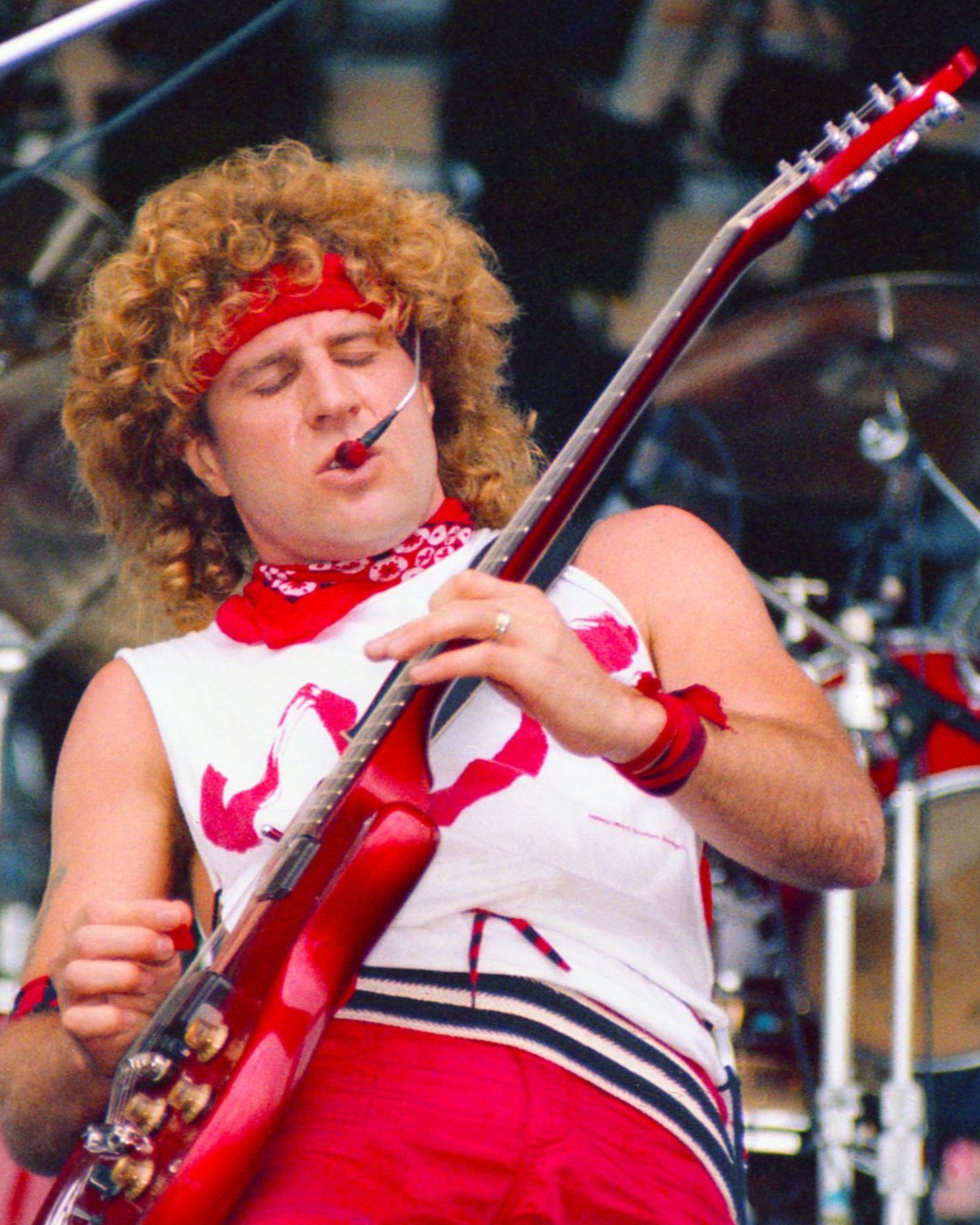
Somewhere on a dark stretch of highway outside Albany, New York, a state trooper pulled over a long-haired driver in a rental car at two in the morning and wrote him a ticket for going 62 miles an hour. The trooper had no idea who the man was. He certainly had no idea that the ticket would inspire one of the most famous rock anthems of the 1980s. The driver was Sammy Hagar, and the song was “I Can’t Drive 55.”
When the Whole Country Drove 55
To understand the song, you have to remember the law. In 1974, during the oil crisis, Congress passed the National Maximum Speed Law, which effectively capped highway speeds across the United States at 55 miles per hour. For a generation of drivers, especially those on long, empty interstates, “double nickel” became a daily frustration. For a car lover like Sammy Hagar, it was close to torture.
A Long Trip Home
In 1983, after wrapping up his tour behind the album Three Lock Box, Sammy Hagar took his family on a long vacation. He has described stops in places like Greece, Italy, Egypt and Kenya, including an African safari. When the trip was over, they flew back to the United States and caught a small plane to Albany, New York.
From there, Hagar rented a car for the long drive north to Lake Placid, where the family had a home and where his son Aaron attended school. It was around two o’clock in the morning. The Northway, Interstate 87, was empty. His wife and kids were asleep in the car.
“We Give Tickets for 62”
Hagar later said he was not trying to speed. He was simply cruising at 62 miles an hour on a deserted road, and at one point he has said he believed the limit was 65. Then a state trooper pulled him over.
Hagar pointed out that there was nobody else on the highway. The trooper was not impressed. According to Hagar, he explained that around there, they gave tickets for 62. The trooper did not seem to recognize the rock star in the rental car, and he began writing the ticket.
That was when it hit him. Hagar turned to his wife and said, “Man, I can’t drive 55.” In a 2024 A&E Biography special, he described the moment this way:
“I swear it was like God struck me with lightning.”
Writing the Song on the Spot
In the most famous version of the story, Hagar grabbed a pen and paper and started writing lyrics while the trooper was still writing the ticket. In another telling, he asked his wife to jot the lines down for him. Either way, the words came fast. When the family reached Lake Placid, Hagar picked up the guitar he kept there, switched on a little tape recorder and finished the song that night.
He later called it the biggest thing he had ever done in his life.
A Hit Born From a Bad Habit
The ticket was hardly Hagar’s first. By his own count, before he wrote the song he had already collected 34 speeding tickets, lost his license three times, and was paying about $135,000 a year for car insurance.
“I Can’t Drive 55” became the lead single and opening track of his 1984 album VOA and a top 40 hit. Its music video, shot at Saugus Speedway in California, became an MTV favorite, with Hagar standing up to a judge, breaking out of jail and leading police on a wild chase. The song became an anthem for every driver who ever felt stuck behind the double nickel. Two years later, Hagar joined Van Halen.
Hagar has joked that the song is the gift that keeps on giving. Since writing it, he says, he has received only two speeding tickets. The national 55 mph limit itself was finally repealed in 1995.
Searching for the Trooper
Four decades later, Hagar became curious about the man who started it all. In 2024, ahead of a concert in Saratoga Springs, not far from where he was pulled over, he told the Albany Times Union that he wanted to meet the trooper who wrote that ticket. He said the officer would be treated like a king, and that he might even bring him on stage to introduce him to the crowd.
The New York State Police put out feelers. A local radio station enlisted the help of Mike Wells, a retired trooper and secretary of the Association of Former New York State Troopers, who sent the question out through his network. It was not easy. Tickets in the early 1980s were written on paper, and at two in the morning, troopers often patrolled in pairs.
Eventually the network narrowed the possibilities down to about four troopers who might have made the stop. All of them had passed away.
A Name Lost to History
Whoever that trooper was, he never got his night backstage or his moment in the spotlight. He was just doing his job on an empty highway, writing a ticket to a driver who was going seven miles over the limit. But every time “I Can’t Drive 55” comes on the radio, he is part of the story.
Do you remember the days of the 55 mph speed limit?