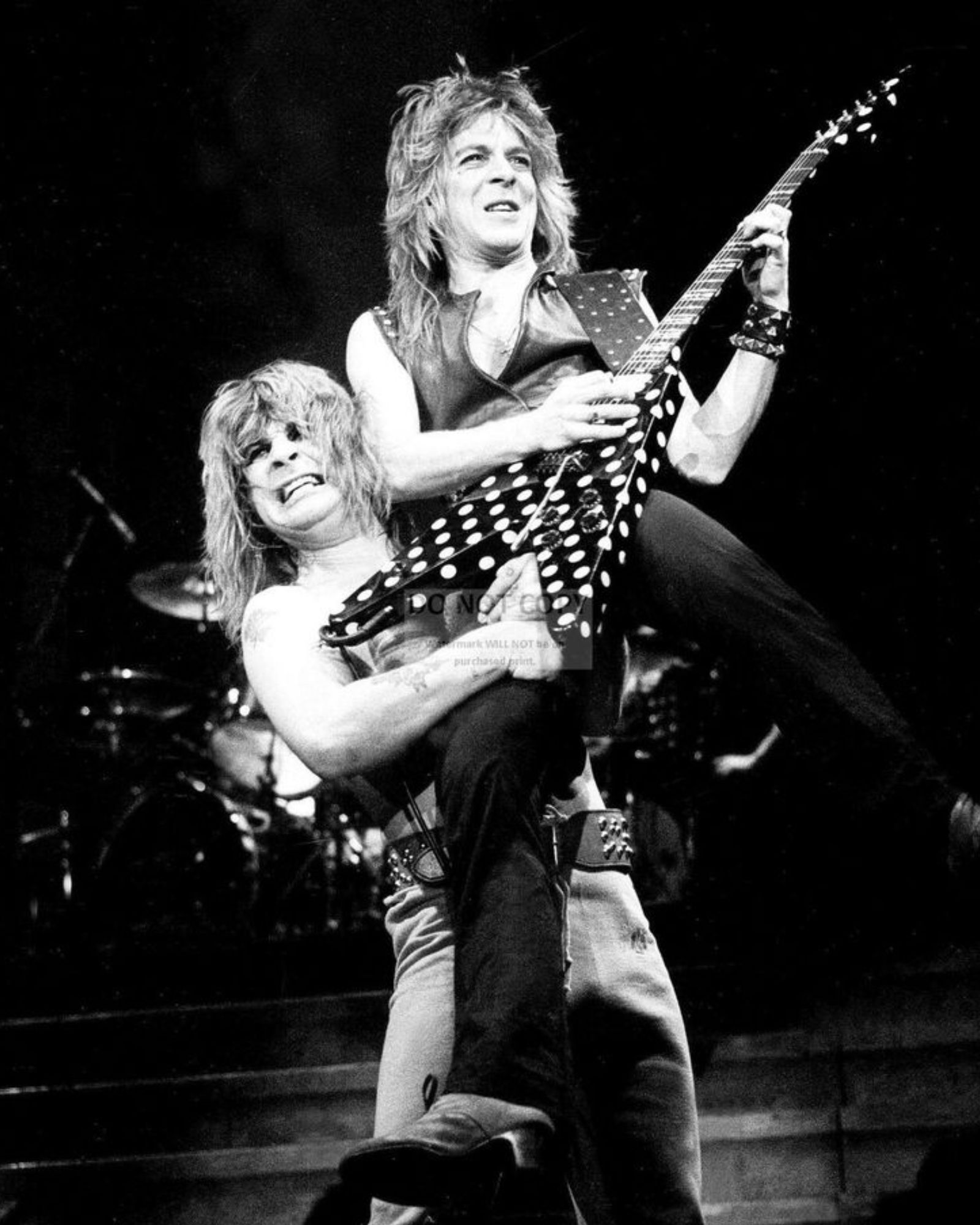
On March 18, 1982, Randy Rhoads took the stage with Ozzy Osbourne in Knoxville, Tennessee. The performance was another stop on the Diary of a Madman tour, with a young guitarist whose recordings had already helped change the direction of heavy metal.
There was no announced farewell. The tour was continuing, and Randy Rhoads had become an essential part of Ozzy Osbourne’s new musical identity.
By the following morning, Randy Rhoads was gone. A plane crash near Leesburg, Florida, ended a life at 25 and left a career defined by both extraordinary achievement and unanswered possibilities.
A New Chapter After Black Sabbath
After Ozzy Osbourne’s dismissal from Black Sabbath in 1979, a successful solo career was far from guaranteed. Black Sabbath had provided the setting for Ozzy Osbourne’s rise, and leaving that band meant building something audiences would recognize as worth hearing on its own.
Randy Rhoads helped make that possible. Alongside bassist Bob Daisley and drummer Lee Kerslake, Randy Rhoads contributed to the sound of Blizzard of Ozz, released in 1980. The album established a powerful new foundation for Ozzy Osbourne.
The partnership offered more than a familiar voice with different accompaniment. Randy Rhoads brought a guitar style that combined force with carefully shaped melody. The opening riff of “Crazy Train” was immediately distinctive, while “Mr. Crowley” gave Randy Rhoads room to develop solos with dramatic movement and memorable phrases.
Speed was part of the appeal, but the notes had direction. Randy Rhoads could make a guitar passage feel like an important part of the song rather than an interruption.
Two Albums With an Enduring Reach
Diary of a Madman followed in 1981, extending the musical partnership. Together, the two studio albums became the central recorded evidence of what Randy Rhoads and Ozzy Osbourne could create.
For listeners discovering those records today, the compressed timeline can be startling. The playing sounds assured enough to suggest a long career of development, yet Randy Rhoads was still only in the mid-twenties.
That distinction matters. Calling Randy Rhoads promising would overlook the work already completed. Randy Rhoads had helped create recordings that would continue influencing guitarists for decades. The promise lay in what might have followed achievements that were already substantial.
The Morning the Tour Changed
After the Knoxville concert, the touring party traveled toward Florida. On March 19, 1982, during a stop near Leesburg, Randy Rhoads boarded a small aircraft with makeup artist Rachel Youngblood. Andrew Aycock, the tour’s bus driver, was piloting the aircraft.
During a low pass, the aircraft clipped the tour bus and crashed into a nearby building. Randy Rhoads, Rachel Youngblood and Andrew Aycock died.
The loss abruptly changed a tour built around music that had helped establish Ozzy Osbourne’s solo career. The guitarist responsible for so much of that sound would never return to the stage.
Remembering the accident also means remembering Rachel Youngblood. Behind a concert are people whose work makes the performance possible, and the tragedy reached beyond the musician audiences knew best.
What the Recordings Preserve
Randy Rhoads’ induction into the Rock & Roll Hall of Fame in 2021 recognized an influence that had outlasted a short recording career. Generations of musicians continued finding ideas in the riffs, phrasing and musical structure Randy Rhoads left behind.
No one can know what another album or another decade would have brought. The future remains speculation. The recordings do not.
Blizzard of Ozz and Diary of a Madman preserve a guitarist helping an established singer begin again while developing a distinctive musical voice. That is the lasting emotional weight of Randy Rhoads’ story: so much had already been accomplished, and there was still so much time that should have remained.