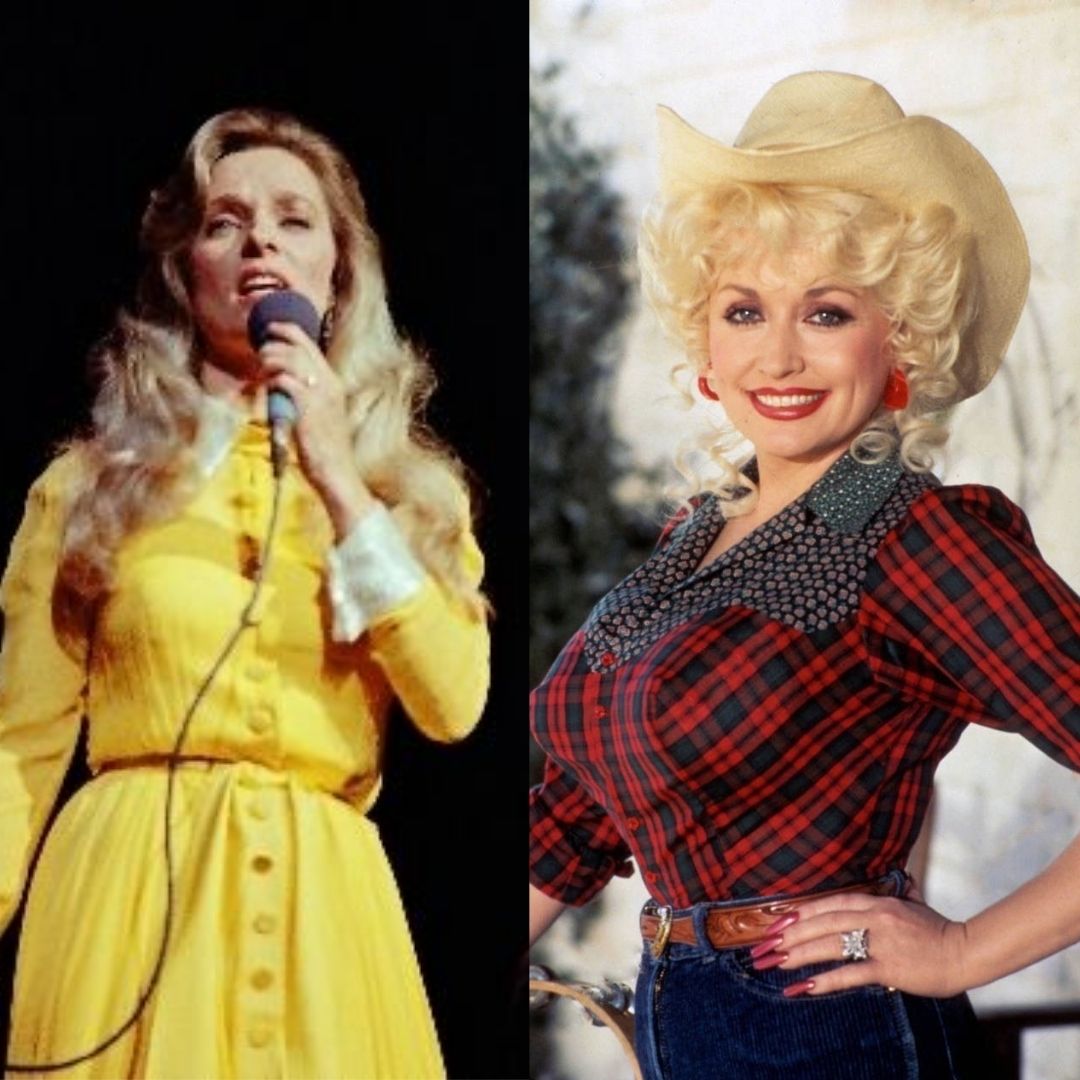
Long before she was a legend, Dolly Parton was a kid hanging around the Grand Ole Opry. In a 2019 interview marking her fiftieth year as an Opry member, she remembered standing in the wings and watching the biggest names in country music, the people she hoped to stand beside someday.
She got her wish. Dolly joined the Opry in 1969 and went on to become one of the most famous entertainers in the world. So when she talks about who can really sing, people listen.
The quote everybody remembers
In an interview years ago, Dolly Parton said there were really only three female singers in the world: Barbra Streisand, Linda Ronstadt and Connie Smith. Then she finished the thought:
“The rest of us are only pretending.”
It was a big statement, and part of it was Dolly being Dolly, generous and funny at her own expense. But the list itself raised eyebrows. Streisand and Ronstadt were household names everywhere. Connie Smith, for many listeners far from Nashville, was not.
Those who knew the Opry understood exactly what Dolly meant.
The girl who hid under the bed
Connie Smith was born Constance June Meador on August 14, 1941, in Elkhart, Indiana. She was the sixth of fourteen children and grew up in West Virginia and Ohio. Times were hard, and the radio, especially the Grand Ole Opry, was her escape.
She was also painfully shy. In a 2015 interview for Country Weekly, Connie Smith recalled that when she was very small, if anybody heard her sing, she would run and hide under the bed out of embarrassment. That included her own parents, at first.
Still, singing was how she reached people. As she put it in that same conversation:
“My communication technique is to sing.”
At five, she declared she would sing on the Opry one day. She made her Opry debut on July 18, 1964, and became a member on August 21, 1965.
A voice built for the radio
Her first single, the Bill Anderson song “Once a Day,” was recorded in July 1964 at RCA Studio B. According to the Opry, it became the first debut single by a female country act ever to reach No. 1, and it held the top spot for eight weeks.
Part of that sound came from a deliberate choice. Connie Smith has explained that her producer, Bob Ferguson, had her sing as high as she could, because he believed a high voice cut through on the radio. He was right. On a small kitchen radio or a car dashboard speaker, her voice jumped out.
She drew from more than country. The Country Music Hall of Fame notes that alongside Kitty Wells and Jean Shepard, she loved jazz singers Sarah Vaughan and Nancy Wilson. You can hear both worlds in the way she bends a note and holds back just enough before letting a line break open.
The singers’ singer
Dolly Parton was not alone. Roy Acuff, the King of Country Music, christened Connie Smith the “Sweetheart of the Grand Ole Opry.” George Jones went on record calling her his favorite female singer. Longtime Opry announcer Eddie Stubbs called her the Rolls Royce of female country vocalists. In 2011, Merle Haggard even recorded “Too Much Boogie Woogie,” a song complaining that modern country needed more Connie Smith.
That kind of praise from fellow artists means something, because it is not about record sales. It is about what other singers hear when they stop and listen.
Why she is not as famous as she should be
If Connie Smith is less famous than Dolly, Loretta Lynn or Tammy Wynette, part of the reason is her own choice. By the late 1960s, she was worn down by constant touring, recording, movies and TV. She stepped back to raise her five children and spend more time in church. She has said plainly that she wanted to sing, but she did not care about being a star.
Later, with her husband Marty Stuart producing, she came back with acclaimed records, and in 2012 she was elected to the Country Music Hall of Fame.
The shy girl under the bed never stopped singing. She simply sang on her own terms, and the best singers in country music noticed.
When did you first hear Connie Smith’s voice? Tell us which of her songs stayed with you.