On March 21, 1994, Schindler’s List won Best Picture at the Academy Awards. It took home seven Oscars that night, and Steven Spielberg finally won Best Director. Most filmmakers would have stopped there.
Twenty-two days later, on April 12, 1994, Steven Spielberg founded the Survivors of the Shoah Visual History Foundation. Its job was simple to describe and enormous to carry out: find the men and women who had survived the Holocaust, sit them down in front of a camera, and record their stories before it was too late.
Within five years, the Foundation had filmed nearly 52,000 of them.
It started on a movie set in Poland
Steven Spielberg shot much of Schindler’s List in and around Kraków in 1993, close to the places where the real events had happened about fifty years earlier. While the cameras rolled, many Holocaust survivors came to visit the set.
These were people who had lived the history the film was recreating, some of them as children. By 1993, most were well into their sixties, seventies, and beyond. According to the USC Shoah Foundation, it was as filming wrapped that Steven Spielberg began to shape the idea of continuing to record survivors’ stories. A single film could only tell one of them. Thousands more were still out there, and every year there would be fewer people left to tell them.
One survivor’s half-century of silence
Celina Karp Biniaz shows what was at stake. Born in Kraków in 1931, she was a little girl when the Germans invaded Poland. Her family survived the Kraków ghetto, and in 1944 she and her parents were placed on Oskar Schindler’s list. She is known as the youngest of the roughly 1,200 Jews Schindler saved.
Even the list did not keep her entirely safe. In the fall of 1944, the women from Schindler’s group were sent to Auschwitz by mistake. Celina, then 13, was separated from her mother during a selection, and at one point she was sent toward the wrong line. She survived, and Oskar Schindler eventually secured the women’s release to his factory at Brünnlitz. She was almost 14 when the family was liberated in May 1945.
After the war, the Karps settled in Des Moines, Iowa. Celina finished high school, went to Grinnell College, married, raised two children, and spent decades as a teacher. Through all of it, she told almost no one what she had lived through. Not even her own children knew she was a Holocaust survivor. She feared no one could understand, and she did not want to pass that pain on to her family.
Her silence ended in 1994, the year Steven Spielberg’s film and his new Foundation brought these stories into the open. In 1996, Celina and her mother recorded their testimonies for the Foundation’s archive.
How the testimonies were gathered
The Foundation trained interviewers and sent them out across the world. They did not bring survivors to a studio. They went to them, into homes and apartments, and let each person tell an entire life: the town where they grew up, the family they lost, the camps and hiding places, and the years afterward when they rebuilt.
Each testimony ran about two hours on average. The interviews were recorded in dozens of countries and more than 30 languages. By the end of the 1990s, the collection held nearly 52,000 testimonies, making it the largest archive of its kind in the world.
In January 2006, the Foundation moved to the University of Southern California and became the USC Shoah Foundation. Today its Visual History Archive holds more than 55,000 testimonies, including later interviews with survivors of other genocides, and amounts to well over 100,000 hours of video.
“Giving me back my voice”
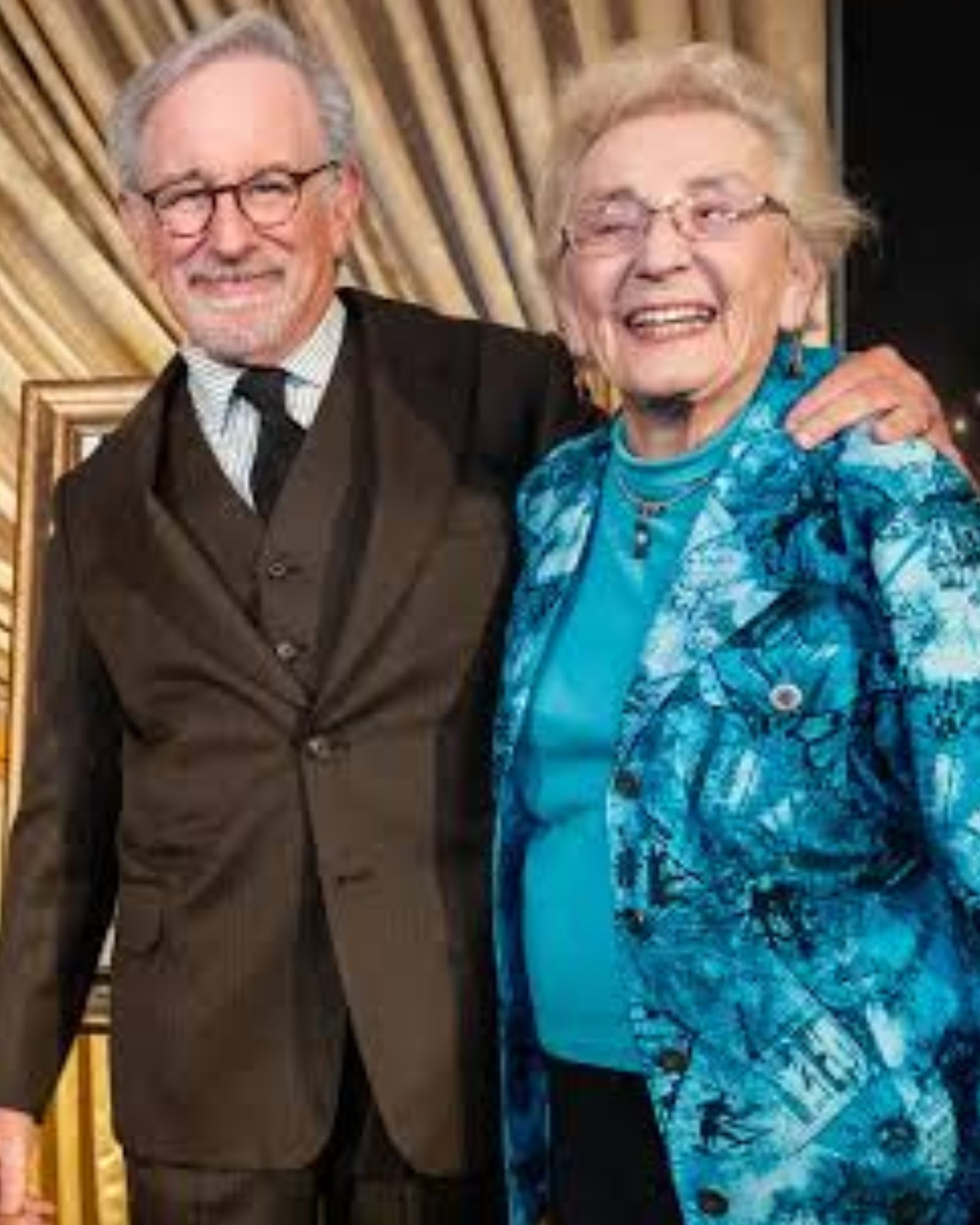
On March 25, 2024, as the Foundation marked its 30th anniversary, USC awarded its University Medallion, one of its highest honors, to the 52,000 Holocaust survivors who had recorded testimony. Celina Biniaz, then 92, was a featured speaker. Steven Spielberg was there.
She spoke to him directly. She reminded the audience that Oskar Schindler had saved her life by putting her name and her parents’ names on his list. Then she addressed the man whose foundation had recorded her story:
“You, Steven, restored my life by giving me back my voice.”
She went on to say that, thanks to him, she could tell the world how the Nazis had stolen her childhood. For nearly three decades after she broke her silence, Celina Biniaz traveled to schools and communities, sharing her story and urging young people not to hate.
That is what the race against time made possible. Many of the survivors who sat in front of those cameras in the 1990s are gone now. Their testimonies are not.