When Kris Kristofferson died in September 2024, his family did not release a long list of accomplishments or plans for a grand public service. Instead, they left fans with a simple, gentle instruction. The next time you see a rainbow, they said, know he is smiling down at all of us.
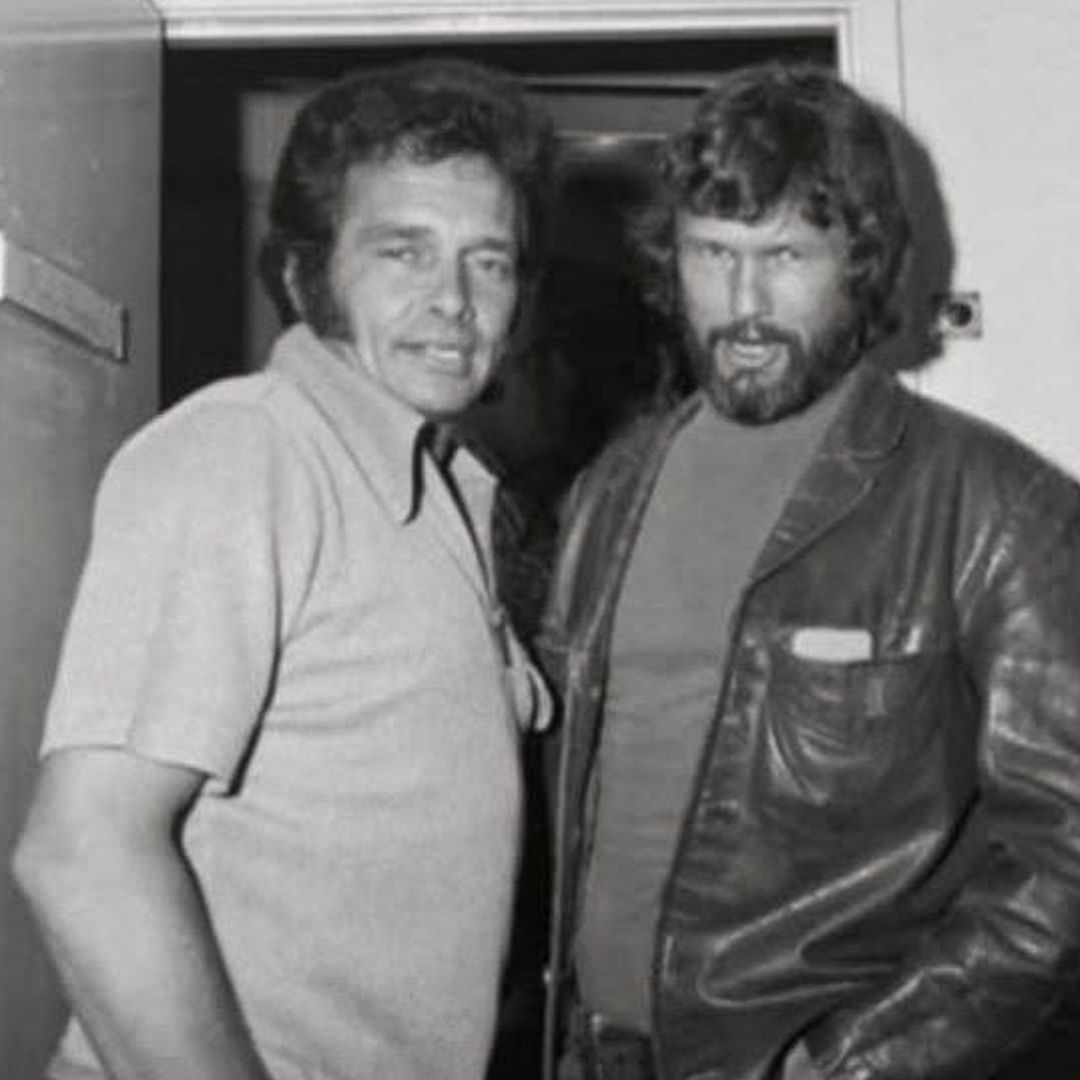
For many fans, it brought back a moment from eight years earlier, when Kris stood at the graveside of an old friend and a gust of wind seemed to carry a message of its own.
The scholar who chose Nashville
Kris Kristofferson was born on June 22, 1936, in Brownsville, Texas, the first of three children in a military family. He excelled at Pomona College as both an athlete and a Phi Beta Kappa student, then went to Oxford as a Rhodes Scholar. Under pressure from his family, he joined the Army.
But in 1965 he left the military to chase a dream that made no sense to his parents: writing songs in Nashville. He scuffled there for more than four years, entering his thirties while his family wondered what had become of him.
Then the songs broke through. Johnny Cash recorded “Sunday Mornin’ Comin’ Down” and turned it into an award-winning hit, which led to Kris’s first album in 1970. Janis Joplin took “Me and Bobby McGee” to No. 1. “Help Me Make It Through the Night” became a standard. Bob Dylan later put it simply:
“You can look at Nashville pre-Kris and post-Kris, because he changed everything.”
Kris went on to a long movie career, starring in films like A Star Is Born with Barbra Streisand. From 1985 to 1995, he recorded three albums with Johnny Cash, Waylon Jennings and Willie Nelson as The Highwaymen. He was inducted into the Country Music Hall of Fame in 2004 and retired from performing in 2021.
Singing Merle home
Merle Haggard died on April 6, 2016, his 79th birthday. A week before, he had told his family he would pass on his birthday, and he did.
Merle planned his own funeral. On April 9, family, friends and bandmates gathered for a private outdoor service at his ranch in Shasta County, California. He had asked Marty Stuart to officiate, and he had chosen the music himself. The service opened with a recording of Lefty Frizzell’s “I Love You a Thousand Ways.” Connie Smith and Marty Stuart sang Merle’s “Silver Wings.”
But it was Kris Kristofferson who sang the most that day, performing three songs. One of them was “Sing Me Back Home,” Merle’s 1967 No. 1 about a prisoner’s last request before his execution, a song drawn from Merle’s own memories of San Quentin.
As Kris sang, a gust of wind swept across the ranch and scattered the pages holding the song’s lyrics. Kris didn’t miss a beat. He smiled and told the mourners, according to Rolling Stone:
“Merle’d done that on purpose.”
Merle’s three sons closed the service with a family version of “Today I Started Loving You Again.”
September 28, 2024
Eight years later, it was Kris’s turn. He died peacefully at his home on Maui, Hawaii, on Saturday, September 28, 2024, surrounded by family. He was 88.
His family shared the news in a short statement. They said they felt blessed for their time with him and thanked fans for loving him all those years. Then they ended with the line that would be repeated around the world:
“When you see a rainbow, know he’s smiling down at us all.”
Kris was survived by his wife, Lisa, his eight children and seven grandchildren. The family asked for privacy, and no public details of his funeral were shared.
The last Highwayman
Waylon Jennings had died in 2002 and Johnny Cash in 2003. With Kris gone, Willie Nelson became the last living member of The Highwaymen.
There is something fitting about the way Kris’s story ends. In 2016, he smiled when the wind took his lyrics and said his friend had done it on purpose. In 2024, his family gave fans a sign of their own to look for. On Maui, where Kris spent his final days, rainbows are part of everyday life. And for the people who loved his songs, every one of them now carries a little bit of Kris.